Showing posts with label prompt. Show all posts

Sunday, May 4, 2014

Week 16 - Last Prompt!

I consider myself lucky that I’ll be able to tell my daughter (who I will finally get to meet this Wednesday – yay for babies) that I remember going to the bookstore when I was younger, browsing the shelves, and picking out physical books. The thrill I felt when I held a brand new paperback copy of a Babysitter’s Club book is one that I still clearly remember to this day! I learned to read with physical books, but I do remember learning the alphabet when I was 3-4 on a brand new (now ancient) IBM PC. However, eBooks were still years off in the future for me. I think it’s amazing – and sad- that so many book stores have gone out of business due to the rise in eBooks and changes in book publishing in general. I want to say that the amount I read has remained consistent over time, but I’ve always been a voracious reader (and everyone knows the reading load in grad school is quite heavy!) I now prefer to read titles in eBook format over physical books, but I still love getting my hands on a first edition with yellowed pages and a musty aroma!

I used to go to the public library when I was a child for special events, the summer reading program and to get VHS tapes and cassettes/CDs as they became available. Now, I use my public library for a combination of digital materials (downloadable audiobooks, eBooks, databases, streaming music and video via Hoopla, etc.) and for programming. My school libraries were always well stocked, and available to students to browse on free periods or during designated times. I’m appalled and dismayed at how many school libraries are closing or have such limited hours and collections!

Road trips and traveling used to be difficult for my family. I was a shy, quiet only child who lugged around bags full of books everywhere I went. Now, I can hold as many titles (in eBook AND audiobook format) as I could possibly ever desire right on my phone, tablet or laptop. I definitely 'sample' more titles now that I'm able to preview the first chapter or few pages on Amazon or OverDrive. 

I’m curious as to what will happen in regards to physical and digital book collections in the next 20 – and even 5 – years. I’ve seen such a struggle with public libraries and DRM in the past few years. Trying to work with vendors and publishers to acquire rights to offer certain titles to the public is a constant struggle, and is one that I certainly hope improves in the future, for everyone’s sake!

I already see larger portions of collections budgets increasing in the future for eBook acquisitions at my library. I expect digital users to exponentially increase as the cost of readers continues to drop (Amazon Paperwhite is down to $49 for Mother’s Day!), and users become more aware and familiar with digital collections. I already see titles becoming more interactive, especially children’s titles. Vooks (http://promo.simonandschuster.com/vook/) and similar interactive titles combine multimedia directly into the eBook.

I sincerely hope that reading statistics at least stay at current levels or increase in the future, but I really do believe that a lot of that depends on how well libraries are able to read their patrons. If libraries are offering titles that patrons truly have an interest in, in ways that they are able to access them, physical trips to the library may in fact decrease, but the ‘virtual patron’ experience will hopefully become more seamless and effortless for the patron.


The traditional publishing world will still continue to drastically change over the next few years. Self-published authors and services that offer users the chance to pay as they go (Netflix type services for eBooks, like Entitle) will most likely continue to gain in popularity in one form or another. With services like Total Boox for public libraries, patrons can even legally download and keep (forever!) certain titles.

When I was very young, one of my favorite parts of the school year was always the Scholastic Book Fair that came to my school library. It was SO exciting, and I would save up all of my allowance to buy such literary masterpieces as Captain Underpants and every. single. Goosebumps. title. ever! Now, I can browse out of print, limited run, international editions and hard to find titles within seconds online. The entire way we purchase and consume titles has forever been changed, and I think it's definitely for the better - although I still love going to book stores! 

Even the way I find out about new titles has changed. With sites like GoodReads, social media, and tools like NoveList, I can find out about new books and reviews from my friends and from people around the world. I used to just rely on the NY Times Bestseller List, but I feel that we have so many more options today!

Sunday, April 27, 2014

Week 15 Prompt: Marketing Fiction Collections

Fiction titles for adults – this is an area of my library’s collection that sees HUGE circulation statistics and interest from patrons. I do feel that we do a fantastic job of marketing these titles (we actually are lucky enough to have our own PR/marketing team that work in conjunction with our reference department fiction selectors.)

One way of marketing within the library that has been very successful in the past is the physical location of our new fiction title arrivals. As soon as patrons walk in the door, they are greeted with a special area dedicated to new fiction arrivals. They know where to go to look for the newest materials, and this also seems to increase browsing in patrons, as well. Near this area, we also have a digital display from OverDrive that is actually a large LCD monitor mounted onto the wall, which displays our entire OverDrive eBook catalog, including fiction titles, which patrons can browse and read samples through. This has also been very popular, and has helped to increase knowledge of our rapidly growing eBook fiction collection.

Special programming throughout the year, such as author talks and readings, can also help to bring patrons in to the library. We usually offer handouts and bookmarks on similar fiction titles both at these special events and at the reference and RA desks to help increase awareness of fiction titles in the collection.

We use displays to highlight parts of the collection when you first enter the library in our glass cases. We’ve had everything from African American authors for Black History Month to Downton Abbey read-a-likes. We also on occasion have taken out small ads in a local newspaper for popular fiction title releases.  We also feature new fiction titles in our physical, paper copy of the library newsletter, along with our digital library newsletter. I prefer the digital newsletter because the patron can simply click the link for the fiction title in the e-mail newsletter and be directed straight the our library’s OverDrive site, where they can place the title on hold, get a sample or check it out and begin reading immediately!

We are currently investigating the idea of a ‘mobile library.’ One option would be to have an LCD screen on the exterior of the bookmobile that would rotate, featuring not only information on the bookmobile but specific titles, such as fiction items. We utilize Pinterest to promote our fiction collection heavily, and receive a TON of unique visitors to our library’s site from this social bookmarking service. We also use Animoto to create short book trailers to promote some adult fiction titles. The videos are posted to our site and our blog. We often use Twitter to promote new fiction titles, but these tweets are rarely re-tweeted. Our catalog is linked through our Facebook site, which allows patrons to access fiction titles easily, but we never really post about the collection (aside from eBook titles.)


There is a HUGE Fourth of July festival and parade in the city where my library is. We are part of the parade every year, and I would like to see a float themed around fiction titles and popular areas of the collection that somehow relate to the holiday.

Wednesday, April 16, 2014

Week 14 Prompt


What a tough topic this week, but one that seriously needs to be addressed. As for LGBTQ fiction, I think that it might be helpful – budget permitting – to perhaps cross-list and have multiple titles of copies to display in a special LGBTQ section. However, would this section incorporate adult and YA materials? If space, interest and budget allowed, I would also be interested in pursuing a dedicated space to highlight LGBTQ YA materials. I can see how frustrating it could be for someone to wander through the stacks or catalog looking for such materials with little information or knowledge! 

In “I Thought I’d Find Myself at the Library”: LGBTQ Services & Collections in Public and School Libraries, Alvin M. Schrader comments on the inadequate subject headings used when categorizing such fiction:

Headings that were used to reflect LGBTQ-related
Bisexuality -- Fiction
 Homosexuality -- Fiction
 Homosexuality -- Juvenile Fiction
 Lesbians -- Fiction
 Lesbians -- Juvenile Fiction
 Lesbianism -- Fiction
 Lesbianism -- Juvenile Fiction
 Gay teenagers -- Juvenile Fiction
 Gay men -- Fiction
 Gay Parents -- Fiction
 Gay youth -- New York (State) -- New York -- Fiction

Headings used that did not identify LGBTQ-related
Coming of Age -- Fiction
 Conduct of life -- Fiction
 Emotions -- Fiction
 Erotic Stories
 Friendship -- Fiction
 High Schools -- Fiction
 Identity -- Fiction
 Interpersonal relationships -- Fiction
 Love Stories
 Schools -- Juvenile Fiction
 Self-Realization -- Fiction
 Sex -- Fiction
 Teenage boys -- Fiction

 “It is apparent that the wide range of subject headings used in library records makes it difficult for interested persons to discover the breadth of LGBTQ-related materials available in their own library – thus impeding access for users browsing the catalogue by subject”(Schrader, 5). Perhaps highlighting this specific part of the collection for users could help to increase circulation statistics. Even having the LGBTQ heading as a search facet in the catalog could help users – particularly with eBooks. I remember an article from early last year about a library (The Bessie Chin Library) opening an LGBT section that also houses films and other resources, such as college guides, but it was aimed more for youth.(http://redwoodbark.org/2013/02/library-adds-new-gtsa-section/)

As for African American books, I would first want author and reader input before separating this genre into its own area. The author N.J. Jemisin has posted an interesting blog post on the subject titled “Don’t Put My Book in the African American Section!” (http://nkjemisin.com/2010/05/dont-put-my-book-in-the-african-american-section/)

I admire her for taking a stand and being so adamant on the issue: “I hate the “African American Fiction” section. HATE. IT. I hate that it exists. I hate that it was ever deemed necessary. I hate why it was deemed necessary, and I don’t agree that it is. I hated it as a reader, long before I ever got published. And now that I’m a writer, I don’t ever want to see my books there — unless a venue has multiple copies and they’re also in the Fantasy or General Fiction section.” She goes on to state that her book The Hundred Thousand Kingdoms shouldn’t be in the African American section ‘because it Contains No Actual Black People. Which should, IMO, at least be a prerequisite for being in that section.’


I like the idea of cross-listing multiple copies along with their genres and in a special section, but at what point does this become cost and space prohibitive?! If pressure from patrons or my library board resulted in my library pursuing an African American section, what would happen if we received a proposal for a Female Authors Section? In the end, I would honestly hope that a committee or group of staff members, along with input from the public and our patrons, would help guide us to a decision that was right for our community based on their wants and needs. 

Tuesday, April 8, 2014

Week 13 Prompt


This week’s prompt hit really close to home for me. I have encountered similar issues in the past where co-workers were dead set against, or not completely on board with the idea of including graphic novels for youth or adults. Street lit – and really, African American literature in general – has never been a top collection priority, and the few items that our collection contains are extremely dated with virtually no circs. I feel that the debate in libraries – and possibly school libraries in terms of graphic novels – harkens back to library days when selectors were arguing about whether or not to include ‘trashy fiction’ into their collections!

It’s really frustrating when multiple patrons ask for titles and I have to turn them away because a single selector or committee decided that a type of material or subject weren’t ‘appropriate’ for our library – based on what? If there is patron interest, I think we should include these materials. As for the common belief that adults don’t read ‘that stuff’ – I can tell you from personal experience that at my library that is not true in the least. We’ve actually separated our growing adult, middle school, and teen graphic novel sections so that they are easier to find for patrons. The number of holds on such titles are fairly high, and circ stats.

With interest in The Walking Dead TV show, we have also had to purchase additional copies of the graphic novels that the TV show is based on. Art and drawing books related to graphic novels and manga are also popular with teens and adults. Luckily, we’ve never had a challenge for a graphic novel or manga title, but the ALA’s website outlines how to deal with challenges for these books: http://www.ala.org/offices/oif/ifissues/graphicnovels

I really like their answer for the question, ‘Why do libraries have to buy graphic novels?”: 

Why do libraries have to buy graphic novels?

The library has a responsibility to serve its community-your neighbors-including those you may not agree with or who may not agree with you. Libraries purchase materials, such as graphic novels, because they have a mission statement that requires them to serve a broad range of community needs and wants. The material you find in your library was selected by librarians, who are taught as part of their professional education to determine the needs of their communities and to select materials based on library policies.
As for YA titles for adults, it has been suggested that we incorporate our YA titles into our actual fiction collection – so we would end up with a second (or third) copy in an alternate location as to encourage adult patrons to discover the world of YA literature. Currently, our YA dept. is small, and always full to the brim with high school students. One way that several of our adult patrons who don’t like to visit the YA dept. to obtain YA materials get around this is by placing on-shelf holds online for the titles they’re interested in. We’ve also found that offering these titles available as eBooks, and the anonymity involved in procuring them, has increased YA stats! 

Monday, February 24, 2014

Week 7 Prompt


“Don’t Believe Everything You Read – Fake Memoirs”

For this week’s prompt, I began by reading the Wikipedia entry on ‘Fake Memoirs’ (http://en.wikipedia.org/wiki/Fake_memoirs) and was surprised to see ‘Go Ask Alice’ by Anonymous on the list. I remember reading this in a high school Psychology class; this wasn’t too long ago, around 2006 – and I honestly can’t recall my instructor telling the class about the controversy surrounding the book, or the fact that a Psychologist, Beatrice Sparks (Sparks is listed as the author – not editor – of the book by the U.S. Copyright Office) , actually penned the book.

I was a sheltered, only child back in high school. I had received no exposure whatsoever to the lifestyle and choices depicted in the book, and had no friends who had ever experimented with or had access to drugs. We were very overprotected and naĂŻve, and some of the passages from the faux-journal shocked me! That being said, I think that this book, even if it does not contain ANY real passages from a drug user’s diary, still has some form of literary merit. However, I feel sort of duped! I don’t think it’s ethical for professors or parents to present fake memoirs to readers or students, or publishers to present these titles to the public as nonfiction when they are in fact works of fiction. Does the fact that these specific instances never happened to the author in question, or the main character in question, lesson the impact that the work can have on the reader? Stories like this do in fact happen, and I know I was moved by the work, despite its reclassification as fiction. Elissa Gershowitz of The Horn Book Magazine claims that the nonfiction tag was intended to ‘scare readers straight,’ but I don’t know how true that claim actually is amongst its intended audience of teens.


In the late 1970’s, the book was being banned in public schools for encouraging ‘experimentation with drugs and sex and having no redeeming social or literary value’ (Library Journal, 920). SPOILER ALERT - Considering Alice DIES at the end of the book, I have a hard time believing that the book is likely to encourage its readers to go out and recreate the lifestyle of Alice, including living on the streets, trading sex for drugs, and other illustrious themes from the book. However, I can see how parents and educators may be concerned that the partying, new experiences and feeling ‘in control’ that Alice felt throughout the book, as the fictional character claimed, could be a lure for some impressionable young readers. I spoke with several YA librarians at the library where I work – where we have a HUGE number of teen patrons due to the large high school located close to us – about the title’s popularity nowadays. They informed me that the title is still popular now, and that as of last week, 2/3 of our copies were checked out. Perhaps the controversy, including the title’s inclusion on ALA’s 100 Most Frequently Challenged Book List for 1990-2000, has inspired a new generation of readers to see what all of the fuss is about.

When considering the fake memoir controversy of an author such as James Frey, who sold his book through the media as a true-life account, I definitely felt more betrayed than with the story of Go Ask Alice. I never had a ‘real’ face to put to the story, but with Frey, I was angered at his purposeful deception.  In Praise of the Fake Memoir by Robin Hemley, Hemley, who has taught a class specifically on the Fake Memoir at the University of Iowa, believes that many religious texts, such as the Hebrew Bible, share some similarities with the fake memoir, which I can agree with. I love her statement that ‘…in the best works, Truth as such is beside the point.’  (122)

I wish I knew back in high school that Go Ask Alice a fake memoir. I really like the idea of a YA display of ‘fake memoirs’ that would invite readers to judge the book based on literary merit itself. Perhaps even packaging two books together – with one title being a true biography, and one being a fake memoir, and having the reader, upon completion of the books, decide which one they liked better (if they had a favorite), which they felt more likely to a be a true account, and other questions.

---

Gershowitz, Elissa. “What Makes a Good “Bad” Book?.” Horn Book Magazine 89.4 (2013): 84. MasterFILE Premier. Web. 24 2014.

“Go Ask Alice” Banned; “Fever” Book Burned.” Library Journal 103.9 (1978): 920. Education Source. Web. 24 Feb. 2014.

Hemley, Robin. “In Praise of the Fake Memoir.” English Language Notes 49.2 (2011): 119-124. Humanities Source. Web. 24 Feb 2014.

Friday, February 21, 2014

Week 6 Prompt & Booktalk


Book: Cold Comfort Farm by Stella Gibbons
Booktalk Style: Character Based (Pretending to be a character from the book)
Booktalk Audience: Female, Ages 18+ (Adult females, possibly older high school students)

Booktalk Script:

The education bestowed upon myself, Miss Flora Poste, by my loving parents was expensive, athletic, and prolonged; when they died within weeks of one another during the annual epidemic of influenza, and I only nearing my twentieth birthday, I discovered I possessed many womanly arts, but grace save that of a way of earning my own living. 

Along with inheriting a strong will from my father - and from my mother, very slender ankles, I was left with a trifle 100 pounds a year. Desperation has driven me to the worst possible situation imaginable: country relatives, the Starkadders, who reside in Sussex at a ghastly, dilapidated farm known as Cold Comfort.

I have encountered several areas where I might be made of assistance in improving my cousins, the lustful, handsome Seth and despondent Reuben; the flowery, far too intellectual for her own good Elfine; cousin Amos, constantly preaching of hellfire and sin - and dark, depressed and dramatic cousin Judith, mother of the aforementioned oversexed Seth, who insists that the family must right a wrong done to my father in years past. And then, there’s ancient Aunt Ada Doom, who hasn't left her bedroom in nearly two decades.

To top things off, a wedding seems to be looming in the future at Cold Comfort Farm - but if it is to be mine remains to be seen!

Possible Presentation Ideas:
  • Presenting in character, dressed as Flora Poste in costume
  • Creating a digital booktalk, with images of locations and characters mentioned in the book
Opinion on Baker's Statement:

Personally, I believe that it could potentially be very difficult to do a booktalk successfully without having first read the book - at least in part. I have discussed this point with several RA librarians at the library where I work, and have even encountered them thirty minutes before a booktalk randomly skimming the pages of their books at the last minute - completely unprepared prior to the talk! However, several of them have told me that these have made some of their best book talks. However, I feel it is very important to feel comfortable and prepared prior to a booktalk. You need to be able to hype up and explain the plot, characters, setting, time period, etc., depending upon the style of your booktalk. Additional research into the time period and geographical setting could also be of help when persuading readers to take a stab at the selection(s) you have chosen. Cold Comfort Farm IS a book I have read over and over again, and one of my favorite books of all time. I think the fact that I am so familiar with the characters, plot, setting, tone, and memorable quotes and scenes helped me to create a more unique booktalk without having to perform further research into the title.

As to whether loving the book is a necessity, I don't think that's necessarily a vital component of the talk itself. It definitely helps if it is a book you feel strongly about in a positive light. If it's a book you absolutely can't stand, for one reason or another, it can be difficult to remain objective during your talk. Being passionate during your talk can both help and hinder you in that it can drive some readers away while enticing others to dig right in.


Sunday, February 16, 2014

Week 5 Prompt

How does a lack of professional reviews affect eBook only books – especially in the romance genre?

A lack of professional reviews, or being forced to rely on a small number of professional reviews that can be difficult to locate (or only for specific genres) can make it challenging for title selectors at libraries to make properly informed decisions when purchasing items to add to their library’s collection. A professional review may include elements left out by an amateur reviewer or reader.

How reliable are the Amazon and Blog reviews for the eBook only romantic suspense novel? Do they follow the guidelines Erin talked about in her presentation? How likely would you be to buy this book for your library?
Personally, I don’t feel that the Amazon user review and Blog review are as reliable as professional reviews, but I do strongly feel that a selector (and conscientious reader) must take advantage of some type of review prior to reading or purchasing a title. I felt that the Amazon.com review made overarching generalizations about the book from the first sentence: “…Kelly Wallace confirms her reputation as a novelist of great distinction.” Really? Because this is an eBook author that I’ve never heard of, and this reviewer’s idea of a novel of ‘great distinction’ might be completely different than mine! The quality of the language of the review on Amazon is higher than that of the one found on the blog.

One thing that I found interesting about the Amazon review is that it was written by ‘Professor Emeritus’ Dr. Leonard Rosmarin. What, pray, is Dr. Rosmarin a professor of? This reviewer could have a specialty in Anthropology, for all we know! I took it upon myself to Google the professor to find out more about his background. It turns out that he is a professor of French Literature, and he has written ten books. This makes me feel more confident about his review of the eBook in question.

I went back and reread the guidelines from Erin’s presentation, which actually come form author John Updike:

1. Try to understand what the author wished to do, and do not blame him for not achieving what he did not attempt.

2. Give him enough direct quotation--at least one extended passage--of the book's prose so the review's reader can form his own impression, can get his own taste.

3. Confirm your description of the book with quotation from the book, if only phrase-long, rather than proceeding by fuzzy precis.

4. Go easy on plot summary, and do not give away the ending.

5. If the book is judged deficient, cite a successful example along the same lines, from the author's ouevre or elsewhere. Try to understand the failure. Sure it's his and not yours?

I tried to look for each individual element at a time as I read each review. I found that neither review included an actual quotation from the book itself, let alone an extended passage. In this aspect, neither reviewer followed Updike’s guidelines, but at the same time, neither reviewer revealed the ending of the book, which is a plus.

I really don’t know how if I would purchase this book for my library or not. Our eBook collection is fuelled by patron interest, reviews and what publishers and vendors predict will popular. We try to base eBook selections on what people are actually checking out. Romantic novels are very popular at my library in eBook format. I believe that this is due to the anonymity of their check out – women don’t need to be seen browsing the romance area of the library or checking out paperbacks with covers of half naked men of them if they don’t want to – they can enjoy shirtless men on horseback from the privacy of their own homes. If this book were available for purchase, if the cost was not too high, and there was patron interest, I might purchase it for the collection at my library.

How do the Angela’s Ashes reviews make you feel about the possibility of adding Angela’s Ashes to your collection?

The reviews of Angela’s Ashes would make me more inclined to add this title to my library’s collection than not having reviews. For example, The review by Malcolm  Jones from Newsweek states that the title is a ‘splendid memoir,’ and that ‘it is only the best storyteller who can so beguile his readers that he leaves them wanting more when he’s done.’ This title has been immensely popular at my library since its publication as a hot title for book discussion groups, and fans of Joyce have tended to show an interest in Frank McCourt’s work.

Do you think it’s fair that one type of book is reviewed to death and other types of books get little to no coverage? How does this affect a library’s collection? And how do you feel about review sources that won’t print negative content? Do you think that’s appropriate?

I really don’t think it’s fair that one type of book is reviewed many times over while other types getting minimal (or no) coverage whatsoever. I don’t think that this is genre specific, however. If a selector relies heavily on reviews for acquisitions, a lack of reviews for a title could negatively affect the collection if a title that would have been of interest to patrons or added value to the collection was not selected due to a lack of reviews of any kind. Furthermore, titles with numerous reviews (especially positive ones) could make a selector more inclined to choose a title, when it might not be appropriate for the collection.

I follow author Anne Rice on Facebook, and she recently posted an article about how negative reviews can affect authors (she specifically spoke about Amazon user reviews.) You can read this interesting take from a popular author here: http://sumikosaulson.com/2012/08/18/anne-rice-regarding-the-amazon-review/

One of the quotes form Rice that struck me from this article was that ‘authors have told me [Rice] they will not go on Amazon at all. They’ve been so devastated by the savage reviews there that they simply can’t.’ One of my close friends self-publishes in eBooks only format on Amazon, and he has told me that despite feeling like a part of himself is being ripped out and stomped on whenever he reads a negative or scathing review, he is often able to use it as a reflection tool to build upon and better his work.

I also found this Facebook post from Rice regarding negative reviews to be of interest:

Guys, I am always open to publishing negative reviews of my work for consideration, to balance the many positive reviews to which I link. But the negative reviewer must bring the review here and request it. When I've linked to negative reviews for discussion, some of the reviewers in question have felt that they were unfairly targeted; and they have objected to some of the comments made on their reviews. It just doesn't work. So I no longer volunteer any negative review, no matter how well written, for discussion. Again, reviewers are welcome to bring their reviews to the page, and post links and offer them for discussion. Same with blog posts. I might not repost every single one; but I'm happy to see them posted on the page and to read them and consider them for reposting. – Anne Rice, Facebook, January 2nd, 2014

I don’t feel that it’s appropriate at all for a resource to not allow negative reviews. However, I do think that a negative review should be published simultaneously with a positive review (if one is to be found.)

If you buy for your library, how often do you use reviews to make your decisions? If not, how do you feel about reviews for personal reading, and what are some of your favorite review sources?

Unfortunately (and thankfully?) I am not a title selector at my library, but I was able to interview a reference librarian (in charge of a large Dewey selection of the collection) and a children’s librarian. Both librarians informed me that they take into account both professional reviews (Kirkus, Book Review, etc) and user reviews, but that user reviews have been making more of an impact on them with the advent of Amazon and GoodReads reviews.

Personally, I use GoodReads and Amazon reviews for locating reviews for titles. However, I’ve found that I need to take many reviews with a grain of salt, just as I do with restaurant reviews on Yelp or UrbanSpoon. Some restaurants that I absolutely love are only rated 3 stars, and I don’t understand why the reviewers can rate them so low – and the same goes with some of my favorite authors and series. For example, I enjoyed the last Sookie Stackhouse book from Charlaine Harris. However, SO many readers gave such an overwhelmingly negative response on Amazon that Harris herself ended up posting on Facebook a response to the criticism. I think that user reviews can help guide you to a book you might otherwise be questioning (reader RA), but you can’t always trust the judgment of other readers.

Tuesday, January 28, 2014

Week Three Prompt


1. I am looking for a book by Laurell K. Hamilton. I just read the third book in the Anita Blake series and I can’t figure out which one comes next! 

To begin this search, I would first go to the NoveList site and log in. On the homepage, I perform a ‘Series’ search for ‘Anita Blake.’ Surprise, surprise, two results pop up: one for the original series, and the other for the graphic novelization of the series. Just to confirm that I’m giving the patron the correct information, I ask the patron if they meant the original or graphic series. Assuming the patron is looking for the next book from the original series and not the graphic novel series, I select that series. NovelList shows that the third book (the one recently read by the patron) is ‘Circus of the Damned.’ I confirm with the patron that this is the title of the book they just finished reading – there is always the chance that the patron *thinks* they’ve just finished the third book, but it was really a different book in the series.

If the patron confirms that they just finished reading Circus of the Damned, the third book in the series, I inform them that Book 4 is titled ‘The Lunatic CafĂ©.’ To conclude the RA interview, I inquire if the patron would like the location of the book, or if the item is currently unavailable, if they would like me to help them place it on hold. If the item is unavailable, I can also ask if they would like suggestions for a book or series that is similar to the Anita Blake series.

 2. What have I read recently? Well, I just finished this great book by Barbara Kingsolver, Prodigal Summer. I really liked the way it was written, you know, the way she used language. I wouldn't mind something a bit faster paced though.

To begin, I would first perform a NoveList title search for ‘Prodigal
Summer.’ Since the patron noted that they liked the way the book was written, I look at the ‘Writing Style’ descriptors, which are listed for this book as being ‘descriptive, lush and lyrical.’ I can explain to the patron that the book is descriptive, lush and lyrical, and that I can help them find a title that is similar in writing style but with a faster pace. As for the pacing of the book, I’m out of luck with NoveList – the pacing is not mentioned for this book. I could suggest to the patron one of the suggested read-a-likes from NoveList, ‘The Queen of the Big Time’ by Adriana Trigiani. It shares the genre of mainstream fiction and the ton is listed as ‘heartwarming,’ where as the tone of the other title is ‘romantic.’ However, this book is listed as being fast-paced, which might be of interest to this patron. I can use the ‘Search for More’ feature from the title page on NoveList, looking for books with the three writing styles featured here, along with the genre of ‘mainstream fiction.’ Performing a search using DE “Descriptive” DE “Fast-paced” returned 0 results, so instead I went with a search for DE “Descriptive” and selected the pace as being ‘Fast-paced’ from the advanced search options. Performing a search for a title that included the same three appeal terms came up with 0 results, but this broader search came up with significantly more hits.

I could narrow the search further by asking the patron about specific genres: do they enjoy historical fiction? Love stories? Mysteries? I could also ask them about the tone of the book and phrase the question around how some books are suspenseful or violent – would they be interested in those? If the patron is specifically interested in Eco-fiction (such as with the title they just read), I could also find more books that are faster-paced with a similar writing style from that sub-genre.

I could also suggest a different Kingsolver book to the patron, such as 2012’s Flight Behavior, which also shares the writing style of being lush and richly detailed. The genres are exactly the same as the other title, but the pace is not mentioned. I could offer the total page length to the patron as an indicator of pacing – perhaps one of these titles is shorter than the other in length. I could offer these suggestions to the patron, including a description of the titles to see if they might be interested before helping them locate the items. I would also end the interview by inviting them to return to the RA department if they needed further help.


3. I like reading books set in different countries. I just read one set in China, could you help me find one set in Japan? No, not modern – historical. I like it when the author describes it so much it feels like I was there!

On the main NoveList homepage, I will use the Subjects/Appeals search to look for ‘Japan.’ Once I have selected this search term, I will narrow the search by looking for ‘historical fiction.’ Since the patron commented on how they enjoy a descriptive writing style, I will further narrow the search by looking for descriptive and richly detailed works.

The search results include the following titles:

 a.) The Great Fire – Shirley Hazzard. The setting of Japan is reflected in the story of a woman who tends to her dying brother. The writing style is descriptive.

b.) The Final Storm: A Novel of World War II in the Pacific – Jeff Shaara. This historical fiction title is descriptive and richly detailed.

c.) The Teahouse Fire – Ellis Avery. His title is historical fiction, and features a descriptive, richly detailed writing style. I could offer to print or show these results and more to the patron. If they were interested in any of the titles, I would offer to help them locate the items with the library’s location or place them on hold.


4. I read this great mystery by Elizabeth George called Well-Schooled in Murder and I loved it. Then my dentist said that if I liked mysteries I would probably like John Sandford, but boy was he creepy I couldn't finish it! Do you have any suggestions?

I would begin by telling the patron that I personally love the Elizabeth George books, and that this book was actually part of the Thomas Lynley mystery series, and were they aware it was also a television show, and we carry not only the books but the show, as well? I would search for suggestions for this patron in NoveList by performing a title search for ‘Well-schooled in Murder.’ Taking into account the fact that the patron found John Sandford titles ‘creepy,’ I would ask the patron several follow-up questions, such as: “Are you interested in mysteries and police/detective stories? Do you enjoy reading about violence, or just suspense, or both?”

Depending upon their answers, I could search by subject, genre and tone for further recommendations based upon those similar to Elizabeth George. I can also perform a read-alike author search for Elizabeth George. Several similar authors include Tana French, Ruth Rendell and Peter Robinson.

I could suggest more books in the Thomas Lynley series, or perform a similar series search on these titles, which includes the following similar series:

a.) Adam Dalgliesh Mysteries – P.D. James

b.) Nora Gavin and Cormac Maguire Series – Erin Hart

c.) Lord Peter Wimsey Mysteries – Dorothy L. Sayers


5. My husband has really gotten into zombies lately. He’s already read The Walking Dead and World War Z, is there anything else you can recommend?

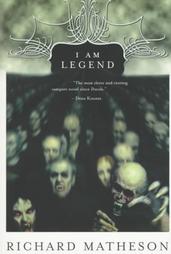
I would begin by searching NoveList with a ‘Subjects/Appeals’ search for ‘zombies.’ I would narrow this search by popularity to find more popular titles, such as the two that the patron said her husband had already ready. The second book that turned up in this search was actually ‘World War Z,’ and the third was ‘The Walking Dead Compendium’! I could offer more Walking Dead titles to the patron. I could also offer other books from the author of World War Z, such as ‘The Zombie Survival Guide: Recorded Attacks,’ or ‘The Zombie Survival Guide: Complete Protection from the Living Dead.’ Based on the read-a-likes from NoveList that actually feature zombies (or zombie-like characters), I could also suggest the classic ‘I Am Legend’ by Richard Matheson (and the several film versions of the book from the AV department.) Another read-a-like provided is ‘The Zombie Autopsies: Secret Notebooks from the Apocalypse’ by Steven C. Schlozman. A truly great feature of NoveList is that it connects to GoodReads – I could also tell the patron the average user rating of the book from GoodReads without having to go to the site.


How I Discover New/Old Treasures

As for looking for materials for myself, I have a very rigid schedule and set of search tools that I use on a regular basis. I love finding out about new releases super early so that I can place them on hold at my library, or suggest them for purchase. Aside from Baker and Taylor and Midwest Tapes (the companies that my library uses for acquisitions,) I check Amazon.com every Tuesday (new release day) for new releases and upcoming releases for books, eBooks, audiobooks, Blu-Ray, DVD and music. I also browse GoodReads for new titles, and I use the ‘Forthcoming’ search filer on NoveList to find titles that are scheduled for publication pretty far out. I use these same resources to find materials for patrons, friends and friends. Being able to get instant read-alikes with so many search options and descriptors from NoveList is so nice, but Amazon also offers similar titles on product pages (just nowhere near as advanced an algorithm as NoveList – I hope…for what my library pays for it, anyway!)